


Yay, normality is back! At least for the most part. We don't know how long it will stay that way (keyword „delta variant“), but for the moment it is. So is everything good again? Or could things perhaps even be better than before?
The corona crisis as a prime example
Whether we emerge stronger from a crisis also and above all depends on ourselves, because after the crisis comes the exploitation of opportunities. We can make a decision: Either continue our lives as we did before the pandemic. Or we can seize the opportunity to make positive changes in our lives.
Do we have to fulfill all our annoying obligations again just because they are allowed again? During the lockdown, many people were almost relieved from the eternal social stress of „We should invite him back“ or „Oh man, it's club meeting time again on Friday“.
NOW, after the crisis, is THE opportunity to clear your schedule and update your circle of friends. Honest and courageous. Who did I really miss last year? Who has proved to be a real friend in need? Which events have always been a pleasure to attend and which have not?
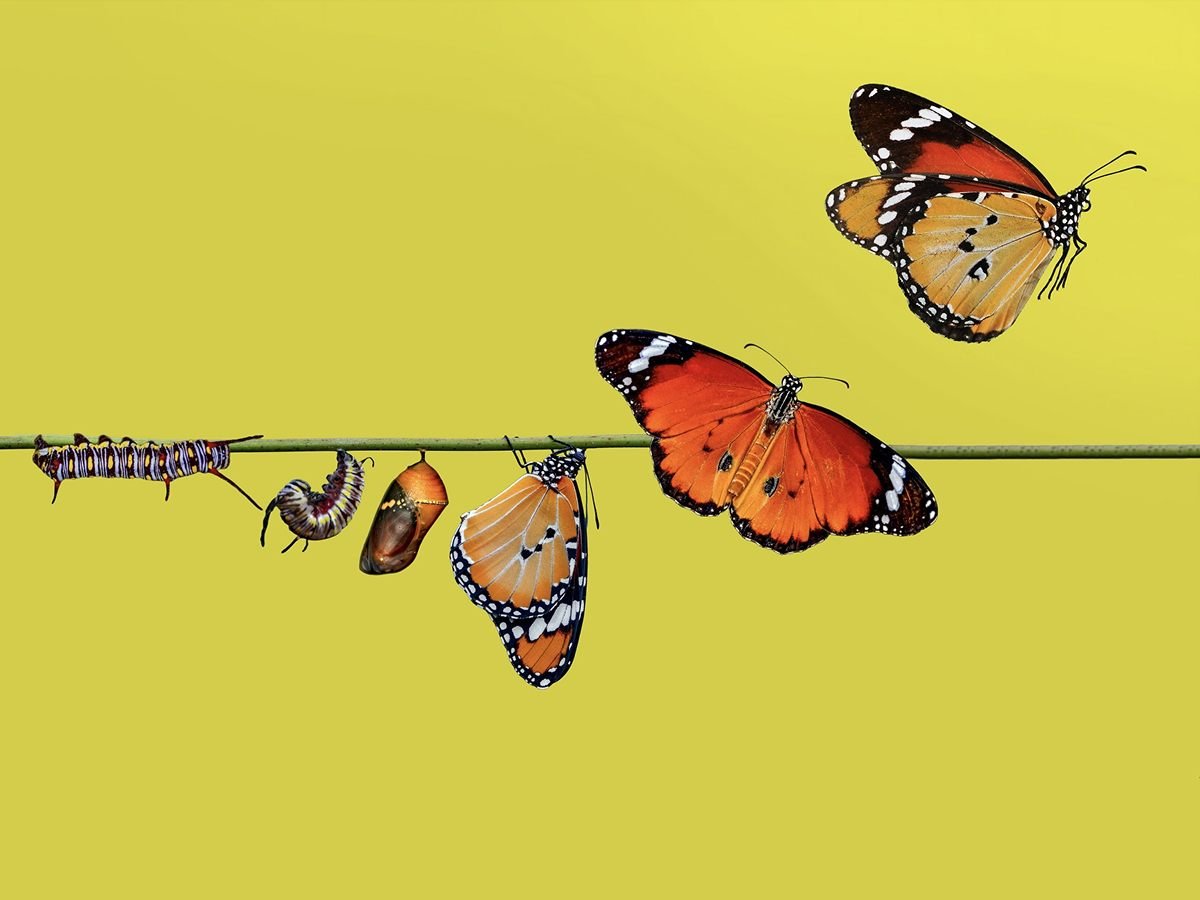
Corona has given us the historic opportunity to reorganize our lives. Anyone who stands up like a barnacle and carries on as before could miss the opportunity of a lifetime. The butterfly is probably the better role model: it flies into its new life instead of crawling back into its cocoon.
In today's blog article, you will find inspiration on how you can turn crises into opportunities.
Stand-up men are none Good role model for resilience!
The standing man is a symbol of resilience: fall down, get up. Children play enthusiastically with wooden standing men because you can push them over as often as you like - they always get up again. But what seems funny as a toy sometimes has serious consequences in real life. Because when people behave like little skipjacks - get up, keep going, they always fall down in the same place where they just got up. Why is that? Because they are static. They neither change themselves nor their position. As if they were made of wood.
How can it be that people always make the same mistakes without learning from them? In my opinion, one of the reasons is that people like to escape into their comfort zone after crises in order to recover from painful experiences.
However, the longer they stay in their comfort zone, the less they feel the need to learn from the crisis and change something fundamental in their lives. And then they often say: „It's all good again. It was only half as bad. I'll just try again.“ At least that's how it was for me.
Growing from crises - step by step
Crises are and remain painful. That's why you should at least take the opportunity to grow from them. The following three steps will help:
1. recognize or acknowledge a crisis
Pause and mourn what you have lost. Allow the pain to happen instead of sugar-coating the situation. Recognize that things cannot go on as before. Accept the crisis as a challenge and an invitation to change.
2. look for opportunities
What can I learn from the crisis? Am I perhaps part of the problem myself? That would be good, because then I can also find the solution within myself. What can I change to change my life for the better?
3. dare to make changes
Don't just carry on as before and fall back into old patterns. Use the crisis as a powerful boost to courageously break new ground that I didn't trust myself to do before or had put off for the sake of convenience.
„The only constant in life is change,“ said the Greek philosopher Heraclitus. Life is designed for growth. Crises are often the result of postponed changes that are necessary for our growth. Instead of resisting growth, we should therefore proactively integrate it into our lifestyle.
Therefore:
- Recognize that change is part of life.
- Proactively and constantly shape changes in your life.
- Use crises as an opportunity for growth through change.